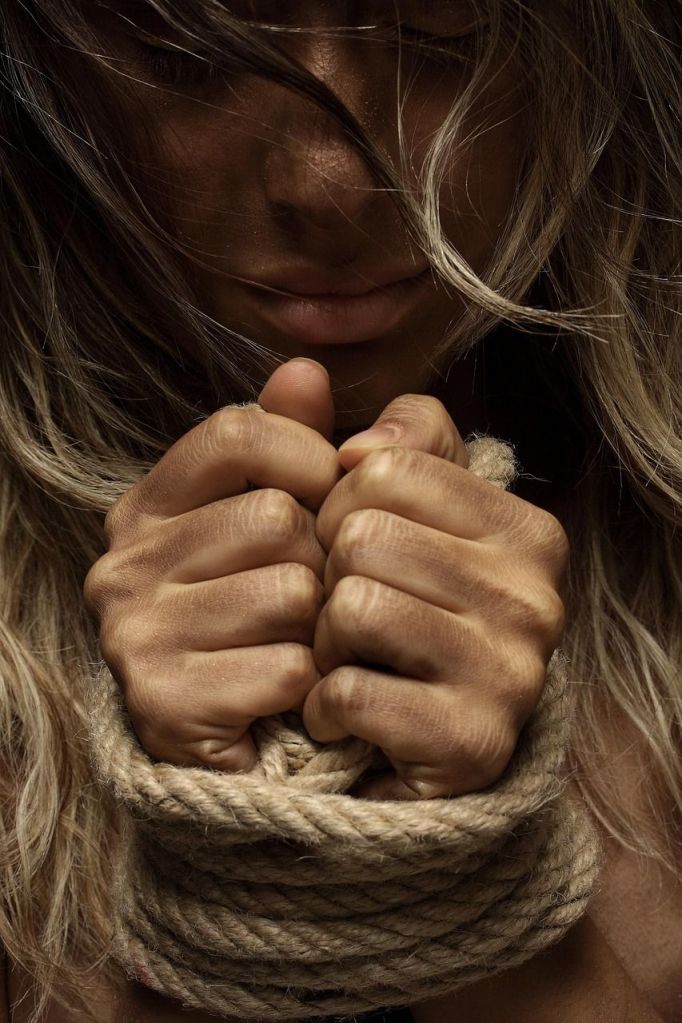
Blog about illegal surveillance, human rights violations, abuse of power, violence against women, misogyny, hate crime, organised harassment, discrimination, racism, illegal human experimentation, and more.
I also am working on my upcoming book Predators. I want to tell a shocking story what I have to go through each day, which may help other victims around the world to come forward and find ways to stop the horrific crime against humanity.
The commercial exploitation of illegally obtained private information for entertainment purposes is also a matter of significant public concern.
My case is therefore of public interest when they allegedly violate most of my human rights in every way possible and also appear to block my access to impartial lawyers and legal advice, to make it challenging for me to stop the abuse, exploitation and human rights violations.
Therefore, the world needs to know what they are doing to me and my daughter under the nose of everyone in a democratic society!
My book will demonstrate how my abusers are not just allegedly abusing and exploiting me but may also exploit my daughter via the hidden cameras as well. It’s one the most evil and cruel things I have ever come across in ny entire life when they seem to abuse my daughter as well, and even keep implying to me that they do, to show me because they think they can.
The book will cost only £1.49 but for a limited time only. It’s an enlightening book that will open your eyes about one of the longest cybersex trafficking in the world among many other illegal acts.
Therefore, it’s a must-read book that shows you the dark side of the world you may not know its existence until you read this book. It may even help you protect yourself from unforseen dangers.
It has often left me speechless how, even after I’ve written openly about the years of harassment and exploitation that my daughter and I have endured, there are still people who choose to join in the abuse, harassment, bullying, stalking, etc. I have described in painful detail what it feels like to be watched, mocked, sexually humiliated, and manipulated — and yet, instead of empathy, some respond with more cruelty by continuing to harass me more. But remember, hate has no place in this world.
When people read about someone’s suffering, there are usually two paths they can take: compassion or complicity. Compassion means recognising the humanity of another person and standing against injustice. Complicity means either silently approving or actively taking part in harm. What I see happening around me suggests that many have chosen the latter.
It’s difficult to understand what drives this. Perhaps some have been deliberately misled — fed misinformation by those who wish to cover up their wrongdoing. Perhaps they’ve been told lies about who I am, what I’ve done, or why this is happening, so they feel justified in their cruelty. Or perhaps, for others, the power to join in the humiliation of another person is itself an intoxicating form of control or pure entertainment seeing another human being suffering.
But regardless of motive, the result is the same: the perpetuation of abuse. Every act of mockery, every knowing smirk, every participation in the coordinated harassment keeps the cycle of violence alive. It is not merely “following instructions” or “going along with it.” It is a moral choice — and each person who participates in becomes part of the harm.
What makes this especially alarming is that many of these individuals cannot claim ignorance. They have read my words. They know the toll this has taken on me and my daughter — emotionally, psychologically, and even physically. They know about the sleepless nights, the fear, the humiliation, the destruction of privacy, and the blocking of my access to lawyers. And yet, even with that knowledge, they continue.
When someone can look at suffering, fully informed, and still decide to contribute to it, that reveals something dark about human nature. It exposes how easily prejudice, misinformation, or simple indifference can override empathy. It shows how a society can be conditioned to dehumanise a person — to treat someone’s pain as entertainment or as a tool for manipulation. If this is the case, what’s wrong with the world today?
There’s also another layer to this: bias. Some people are quick to dismiss my experiences because of who I am — a woman of colour, an outsider, a person without institutional power. They assume that if powerful organisations or individuals are involved, then the victim must be exaggerating. This reflexive bias allows abusers to continue unchallenged, hiding behind their reputations and resources.
To those who have read my blog and still choose to side with cruelty, ask yourself this: If something like this happens to you or your loved ones, what would you do? Do you have a daughter, and what would you feel if they’re doing this to your daughter as well?
If you have involved yourself in this harassment in any way — through mockery, gossip, or passive observation — you still have a choice. You can refuse to participate further. You can choose empathy over exploitation and abuse.
I am shocked that no one says, “I don’t want to be a part of this. This is just so wrong.”
And to those who still have the courage to see beyond the lies and manipulation — who recognise the human cost of what is being done — your understanding matters more than you know.
I continue to write because silence would mean acceptance. And I will not accept being silenced, erased, or dehumanised by those who profit from cruelty or those who enable it.
Because hate has no place in this world.
Therefore, I am taking important steps to hold those responsible accountable. The harassment, exploitation, deception and unlawful use of private information will not go unchallenged. I will be pursuing formal legal action against the perpetrators and all entities involved, to ensure that justice is served and that the full scope of wrongdoing is exposed.
In September 2003, Baha Mousa, a 26-year-old hotel receptionist, was detained by British Forces in Basra, Iraq. Within just 36 hours, he was dead.
The public inquiry revealed that Mousa and nine others were subjected to brutal “conditioning techniques” — hooding, sleep deprivation, stress positions, and relentless coercion.
“Detainees deemed uncooperative were beaten, shouted at, and sexually humiliated. The Inquiry found “that most, if not all, of the Detainees were the victims of serious abuse and mistreatment by soldiers during their detention.
After withstanding 36 hours of this treatment, Baha Mousa was found having removed his hood and hand restraints. Perceiving this as an escape attempt, 1QLR’s Corporal Donald Payne brought Mousa to the floor and knelt on his back whilst attempting to re-apply the restraints. According to witness testimony, frustrated that Mousa was not submitting easily, Payne ‘lost control of himself’, punching and kicking the detainee and slamming his head against a concrete wall.”
Two decades on, similar patterns of psychological abuse can still be observed — though they now take covert and technological forms rather than physical ones.
In my own case, I have been subjected to what I can only describe as modern conditioning techniques:
Sleep deprivation, through deliberate noise harassment designed to disrupt rest and recovery.
Psychological intimidation, such as the constant slamming of doors or sudden noises by the housemates each time I move or use the bathroom — signalling that I am under constant surveillance.
Just as the soldiers in Basra used physical violence and sexual degradation to assert dominance over detainees, my abusers use technology, surveillance, and coordinated harassment to assert psychological control and public degradation. Both methods share the same goal — to dehumanise, break down resistance, and condition compliance through fear, humiliation and coercion.
“Escape” Analogy
When I tried to escape the abuse by relocating to Denmark, the abuse, exploitation, intimidation and harassment appeared to follow me. This continuity mirrors a symbolic parallel with the Baha Mousa case: when Baha attempted to remove his hood and restraints — an act perceived as escape — his guards retaliated with fatal violence.
In my case, attempts to regain autonomy and safety have seemingly triggered institutional retaliation, with similar patterns of intimidation reappearing across borders. While the methods differ, the underlying message remains chillingly familiar: “You cannot escape.”
This powerfully illustrates their relentless pursuit and control, and the psychological impact of being unable to escape the abuse.
But it doesn’t stop there. My life is being monetised without consent. Films, commercials, and other media use my private experiences as entertainment, generating profit while causing ongoing harm. It’s like being trapped in a real-life Big Brother, where every moment is exploited.
The exploitation, echoing cases like Fiona Harvey’s, where private lives are turned into entertainment. Films, commercials, and content derived from my life have been distributed internationally, generating profit while inflicting ongoing psychological harm.
It’s systematic, calculated, and retaliatory. Every move I make is tracked. Every personal detail is weaponised and exploitated.
My fight isn’t just for myself — it’s to expose the abuse, hold the perpetrators accountable, and reclaim human dignity in an age where privacy and personal freedom can be stolen with a click.
Intentional Violation of Article 3 ECHR Through Torture, Inhuman or Degrading Treatment
What happened to Baha Mousa was officially condemned as inhuman and degrading treatment, a breach of both the Geneva Conventions and Article 3 of the European Convention on Human Rights. Yet, the psychological equivalents of those banned techniques — sleep deprivation, humiliation, coercion, and sexual degradation — still appear to be used today under new disguises: digital surveillance, social control, and technological intrusion.
These acts are not mere harassment; they constitute a continuation of systemic abuse and conditioning, weaponising humiliation as a tool of domination.
My experience underscores a grim truth: that the instruments of torture have evolved, but the mindset behind them — the belief that one can strip another person of dignity, autonomy, and privacy — remains unchanged.
A Call for Accountability
Baha Mousa’s case prompted public outrage and an inquiry into institutional responsibility. My experience raises similar questions in a modern context:
How far can surveillance and psychological manipulation go before it becomes state-sanctioned abuse?
What accountability exists when conditioning is conducted through covert technologies and coordinated behaviour rather than physical violence?
The lessons from Baha’s death should not be forgotten. Whether in a military detention centre or a civilian apartment, inhuman and degrading treatment is never acceptable. The methods may differ, but the moral violation is the same.
Author’s Note:
This article forms part of my ongoing documentation of human rights violations and systemic abuse, as referenced in my forthcoming legal proceedings. The experiences described are intended to provide context for broader patterns of coercion, exploitation, and illegal surveillance, and to inform public understanding of modern forms of inhuman and degrading treatment.