The Baha Mousa Case and Modern-Day Conditioning Techniques

In September 2003, Baha Mousa, a 26-year-old hotel receptionist, was detained by British Forces in Basra, Iraq. Within just 36 hours, he was dead.

The public inquiry revealed that Mousa and nine others were subjected to brutal “conditioning techniques” — hooding, sleep deprivation, stress positions, and relentless coercion.

“Detainees deemed uncooperative were beaten, shouted at, and sexually humiliated. The Inquiry found “that most, if not all, of the Detainees were the victims of serious abuse and mistreatment by soldiers during their detention.

After withstanding 36 hours of this treatment, Baha Mousa was found having removed his hood and hand restraints. Perceiving this as an escape attempt, 1QLR’s Corporal Donald Payne brought Mousa to the floor and knelt on his back whilst attempting to re-apply the restraints. According to witness testimony, frustrated that Mousa was not submitting easily, Payne ‘lost control of himself’, punching and kicking the detainee and slamming his head against a concrete wall.”

Source: 

The Modern Echoes of Conditioning and Control

Two decades on, similar patterns of psychological abuse can still be observed — though they now take covert and technological forms rather than physical ones.

In my own case, I have been subjected to what I can only describe as modern conditioning techniques:

Just as the soldiers in Basra used physical violence and sexual degradation to assert dominance over detainees, my abusers use technology, surveillance, and coordinated harassment to assert psychological control and public degradation. Both methods share the same goal — to dehumanise, break down resistance, and condition compliance through fear, humiliation and coercion. 

“Escape” Analogy

When I tried to escape the abuse by relocating to Denmark, the abuse, exploitation, intimidation and harassment appeared to follow me. This continuity mirrors a symbolic parallel with the Baha Mousa case: when Baha attempted to remove his hood and restraints — an act perceived as escape — his guards retaliated with fatal violence.

In my case, attempts to regain autonomy and safety have seemingly triggered institutional retaliation, with similar patterns of intimidation reappearing across borders. While the methods differ, the underlying message remains chillingly familiar: “You cannot escape.”

This powerfully illustrates their relentless pursuit and control, and the psychological impact of being unable to escape the abuse.

But it doesn’t stop there. My life is being monetised without consent. Films, commercials, and other media use my private experiences as entertainment, generating profit while causing ongoing harm. It’s like being trapped in a real-life Big Brother, where every moment is exploited.

The exploitation, echoing cases like Fiona Harvey’s, where private lives are turned into entertainment. Films, commercials, and content derived from my life have been distributed internationally, generating profit while inflicting ongoing psychological harm.

It’s systematic, calculated, and retaliatory. Every move I make is tracked. Every personal detail is weaponised and exploitated.

My fight isn’t just for myself — it’s to expose the abuse, hold the perpetrators accountable, and reclaim human dignity in an age where privacy and personal freedom can be stolen with a click.

Intentional Violation of Article 3 ECHR Through Torture, Inhuman or Degrading Treatment

What happened to Baha Mousa was officially condemned as inhuman and degrading treatment, a breach of both the Geneva Conventions and Article 3 of the European Convention on Human Rights. Yet, the psychological equivalents of those banned techniques — sleep deprivation, humiliation, coercion, and sexual degradation — still appear to be used today under new disguises: digital surveillance, social control, and technological intrusion.

These acts are not mere harassment; they constitute a continuation of systemic abuse and conditioning, weaponising humiliation as a tool of domination.

My experience underscores a grim truth: that the instruments of torture have evolved, but the mindset behind them — the belief that one can strip another person of dignity, autonomy, and privacy — remains unchanged.

A Call for Accountability

Baha Mousa’s case prompted public outrage and an inquiry into institutional responsibility. My experience raises similar questions in a modern context:

  • How far can surveillance and psychological manipulation go before it becomes state-sanctioned abuse?
  • What accountability exists when conditioning is conducted through covert technologies and coordinated behaviour rather than physical violence?

The lessons from Baha’s death should not be forgotten. Whether in a military detention centre or a civilian apartment, inhuman and degrading treatment is never acceptable. The methods may differ, but the moral violation is the same.

Author’s Note:

This article forms part of my ongoing documentation of human rights violations and systemic abuse, as referenced in my forthcoming legal proceedings. The experiences described are intended to provide context for broader patterns of coercion, exploitation, and illegal surveillance, and to inform public understanding of modern forms of inhuman and degrading treatment.
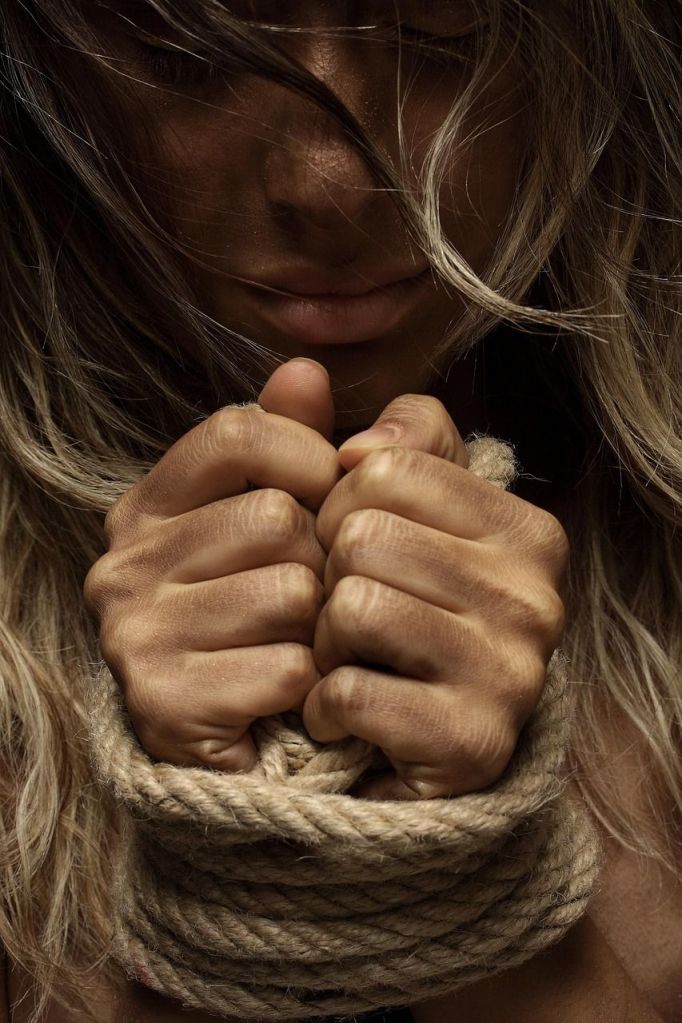
Torture

Organised Harassment Is Public Lynching

For the past several years, I truly believe I have been living a normal life. Just like everyone else. But in reality, I have been subjected to what I can only describe as obsessive and intrusive surveillance.

After finding out that I have been secretly and sexually exploiting via hidden cameras for more than a decade late last year, 2024, and trying to legally stop it, the severe harassment campaign against me started!

The campaign of excessive surveillance and covert harassment against me has now reached an industrial scale where I can’t go anywhere without being harassed, sexually harassed, stalked, and sometimes even intimidated. It’s like public lynching, which is a form of unlawful retaliation and victimisation.

As a 54-year-old South East Asian woman living alone, I have become an easy target for tactics that exploit vulnerability and isolation. This may constitute race, age and gender abuse / discrimination, amounting to violence against women and a possible hate crime as well. This campaign of intimidation, covert harassment and intrusive surveillance has left me fearful, anxious, and exhausted, yet determined to share my story to raise awareness and advocate for justice.

Denmark
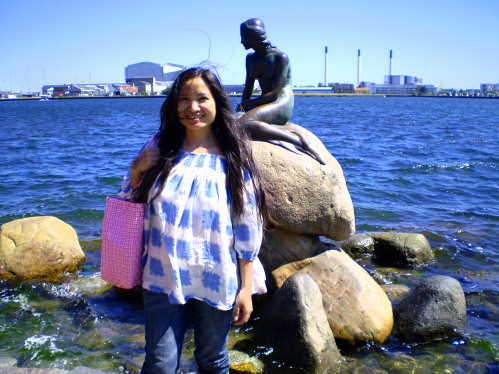
Copenhagen, Denmark.

The systematic and illegal surveillance includes the non-consensual installation of hidden cameras in my private residences, and even in shared rooms and bathrooms at every hostel I have stayed at both in the UK and Denmark, the live broadcasting of my intimate life, and the widespread distribution of these images to pornographic sites, individuals I know, social media sites, tech platforms, and God knows where else they have distributed / live streamed to! They have also engaged in constant cyberstalking, racial and sexual harassment, and intimidation tactics, including displaying imitation firearms when I sought legal counsel.

Many human rights experts have described as covert surveillance and organised harassment. The Office of the High Commissioner for Human Rights (OHCHR) has even documented these techniques: stalking, sound campaigns, conditioning, gaslighting, sleep deprivation, and targeted disinformation to discredit victims. Every tactic they list matches my experience — in detail and intent.

I am constantly monitored through covert means. Each movement in my home seems mirrored by external signals — footsteps, doors closing, whistling, loud conversations, or vehicles driving past my window at precisely timed moments. People appear wearing coordinated colours — navy blue, army green, burgundy, red, and orange, for instance — that have been repeatedly used in this harassment campaign as psychological triggers.

Their actions go far beyond illegal voyeuristic surveillance. The hidden cameras installed in all my accommodations, both past and present, are used not only to record me for distribution purposes but also to excessively monitor me in real time, 24/7. This allows them to coordinate harassment strategies with precision.

For example, when I step into the kitchen, I frequently observe individuals emerging outside almost simultaneously, visible through the small gap of the window. The timing is so exact that it cannot be coincidental; it reflects an immediate response to my private movements. This demonstrates that individuals are being stationed in nearby “holding areas” ready to be deployed at any moment, proving that the surveillance is actively used to harass and intimidate me.

Furthermore, these individuals often wear or carry items in specific colour ranges, as I said earlier, consistently associated with the harassment campaign against me. The repetition of these symbolic colours makes clear that their presence is not accidental but a deliberate sign intended to remind me that I am being constantly watched.

They use conditioning techniques—repeated visible cues such as people coughing, repeated use of specific clothing colours, and people walking past my window at precisely the moments I move—to sensitise and intimidate me and to make me self-police. These tactics, described by OHCHR as recognised harassment techniques, correspond with covert, real-time surveillance of my movements. It’s psychological torture by making me feel uncomfortable around the clock, knowing I am being constantly watched.

To reclaim a sense of agency and to gather irrefutable evidence of the external activities associated with this surveillance, I am exploring the installation of external recording devices. This is a necessary measure to document the ongoing nature of these crimes and to support my pursuit of justice against those responsible for this egregious human rights violation.

The fear of being recorded has affected my daily routines, including basic self-care. I have avoided showering for days, fearing that intimate footage may be captured and distributed without my consent. The strain on my health, hygiene, and emotional well-being is profound. It’s pure torture when I can’t even take a shower.

GoFundMe
Please donate. Just scan the code on the image above or click on it to be taken to my GoFundMe page.

Psychological and Emotional Impact

The tactics used in this harassment campaign mirror those documented by human-rights organizations: conditioning, sleep deprivation, gaslighting, sound campaigns, and repeated hints of being constantly watched to make the victims feel uncomfortable around the clock. These practices are designed to instill fear, self-doubt, and paranoia, ultimately isolating the victim from support networks and normal life. The emotional toll is immense. Feeling constantly watched, and knowing my private life could be misused, has caused severe distress.

A Call to Action

No one should live in fear in their own home. Harassment and invasion of privacy can happen to anyone, but marginalised or isolated individuals are particularly at risk.

So, I want to seek justice, aim to prevent others from suffering similar abuse, and expose systemic corruption. We can create a safer environment for everyone by talking openly about these issues. It is important to support victims. We should thus advocate for stronger protections to guarantee justice.

Please share this post to as many people as you can, including the hashtags: #JusticeForBuppha #HumanRightsAbusesInTheUK

Thank You!